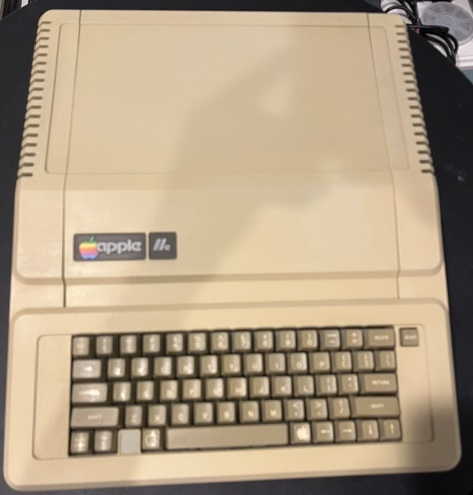
The Apple IIe (enhanced), released in January 1983, was the longest-lived and most popular model in the legendary Apple II series. It refined the classic Apple II+ with improved keyboard, more memory options, and better compatibility, ensuring the platform's dominance in education and home computing through the 1980s and into the early 1990s.
Designed by Apple's engineering team under Steve Wozniak's original architecture, with updates led by engineers like Peter Quinn and Walt Broedner. The "e" stood for enhanced, incorporating user feedback and cost reductions while preserving backward compatibility - a hallmark of the Apple II line.
Announced in January 1983 at $1,395 (with 64 KB RAM), the IIe replaced the II+ in production. Platinum versions (1987) added numeric keypad and cosmetic changes. Over 1 million units sold; production continued until November 1993 - an astonishing 11-year run. It bridged 8-bit computing into the Macintosh era.
The IIe retained the core Apple II design with key enhancements. Key features included:
Iconic beige case with "Apple ][e" rainbow logo.
Applesoft BASIC in ROM for immediate programming. Vast library: VisiCalc (killer spreadsheet), games (Lode Runner, Karateka), educational titles. Enhanced ROM fixed II+ bugs, added 80-column support, and diagnostics. Mouse card (1984) enabled early GUI apps like MousePaint.
The IIe solidified Apple's education dominance - millions used in schools worldwide. Its longevity, expandability (e.g., accelerators to 10 MHz, CP/M cards), and compatibility kept it relevant. It outlasted many 16-bit rivals, introducing generations to programming and computing. Production ended in 1993 as Macs took over. Today, IIe systems are highly collectible, with active communities building modern expansions (SD drives, HDMI, Ethernet) and emulators preserving its role as one of the most influential personal computers ever.