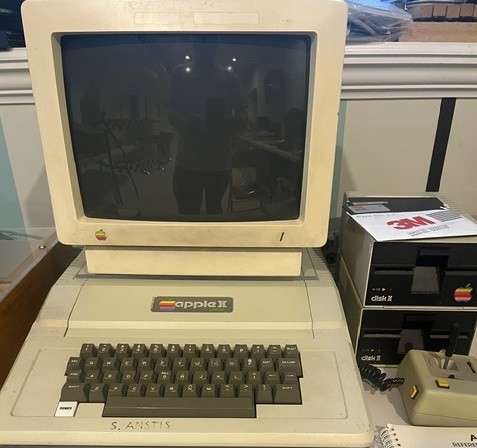
The Apple II Plus, released in June 1979, was the enhanced and definitive version of the groundbreaking Apple II series. It brought greater memory, improved software capabilities, and broader appeal, helping establish Apple as a major force in personal computing and making the Apple II one of the most successful and long-lived computer lines of the era.
The Apple II Plus was primarily the work of Steve Wozniak, who refined his original Apple II design. Steve Jobs drove the business vision and pushed for features that would broaden market reach. The key software addition - Applesoft BASIC - was licensed from Microsoft and integrated into ROM, replacing the original Integer BASIC while retaining it as an option.
Introduced at $1,195 (with 16 KB RAM; higher configurations available), the Apple II Plus addressed limitations of the 1977 Apple II: more standard memory, floating-point BASIC in ROM, and improved reliability. It maintained full backward compatibility with existing software and peripherals. Strong sales followed, especially in education and business after the 1980 release of VisiCalc - the first killer spreadsheet application. Over the life of the series, more than 2 million Apple II Plus units (and compatible models) were sold.
The Apple II Plus used the same core as the original Apple II with key upgrades. Key features included:
The iconic beige plastic case and integrated keyboard became synonymous with early personal computing.
Applesoft BASIC in ROM enabled sophisticated floating-point math for scientific and business use. The open slot architecture fostered a huge third-party ecosystem: printers, modems, 80-column cards, accelerators, and more. VisiCalc's exclusive early availability on the Apple II drove massive sales in offices and schools.
The Apple II Plus solidified the Apple II as the leading personal computer of the late 1970s and 1980s, remaining in production (in various forms) until 1993. It dominated education, introduced millions to computing, and funded Apple's growth into the Macintosh era. Its longevity, expandability, and rich software library made it a cultural and technical milestone. Today, Apple II Plus systems are highly collectible and actively supported by a dedicated retro-computing community.