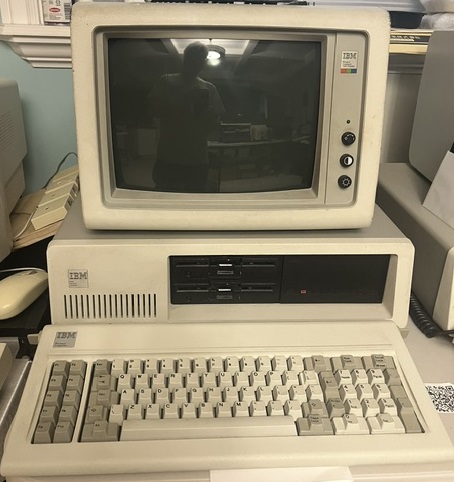
The IBM Personal Computer/XT (model 5160), released on March 8, 1983, was the successor to the original IBM PC 5150. Known as the PC/XT ("eXtended Technology"), it introduced the first factory-installed hard drive in an IBM personal computer, along with greater expandability, solidifying the IBM PC architecture as the industry standard for business computing.
The 5160 was developed by the same IBM Entry Systems Division team in Boca Raton, Florida, that created the original 5150, under the leadership of Philip Don Estridge. The design built incrementally on the proven 5150 platform, focusing on practical enhancements like internal hard disk support and more expansion slots to meet growing demands for storage and peripherals in professional environments.
Announced in early 1983, the PC/XT addressed limitations of the original PC, such as the difficulty of adding a hard drive and limited expansion. Base configurations started with 128 KB RAM (later increased to 256 KB or more), a 10 MB full-height hard drive, and one floppy drive. Priced around $4,995 for a typical setup, it targeted business users needing reliable mass storage. Production continued until April 1987, with later variants offering 20 MB drives and other refinements.
The PC/XT 5160 retained the core architecture of the 5150 with key enhancements. Key features included:
The cassette port from the 5150 was eliminated, reflecting the shift to floppy and hard disk storage.
Shipped with PC-DOS 2.0 or later, which introduced subdirectories, larger floppy support (360 KB), and hard drive partitioning. The open ISA bus and documented design continued to encourage third-party hardware, while the standard hard drive made disk-based applications like Lotus 1-2-3 and word processors far more practical.
The PC/XT popularized hard drives in personal computers, making persistent storage affordable and mainstream. Its expanded slots and robust power supply enabled richer configurations, further entrenching the IBM PC compatible standard. Though seen as evolutionary rather than revolutionary (with the faster 5170 AT following in 1984), the XT bridged the early PC era to more capable systems. Discontinued in 1987, surviving units are valued by collectors as icons of the PC revolution that shaped modern computing.