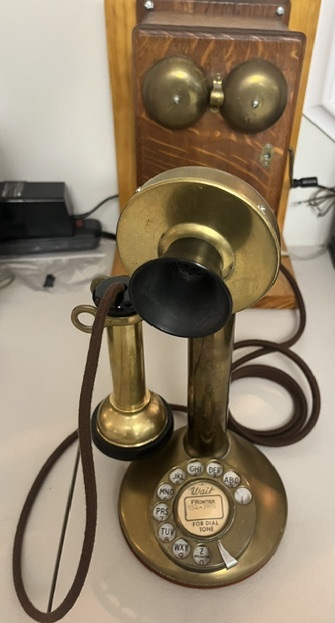
The MicroBasement collection includes several working telephones that showcase the evolution of communication technology. These devices, from a brass candlestick through rotary dial classics to Touch-Tone and digital sets, connect to the Panasonic KX-TD816 PBX for demonstrations of historical dialing methods and in-house features. Below is a detailed write-up on each, highlighting their history, production, and role in the era of leased phone service.
The brass candlestick (desk stand) was the common American desk telephone from the early 1900s into the 1920s, before the combined handset of the 202/300 series. Western Electric's Model 20 family, introduced in the first decade of the century, put only the transmitter, receiver, and hookswitch on the desk; the ringer, induction coil, and condenser lived in a separate wall "subset." This example is a brass stand with a solid-back transmitter marked patented November 1910 (USA) and a later rotary dial whose number plate reads "Wait for dial tone" - a conversion for automatic (dial) exchanges. The oak magneto-style ringer box shown with it is a typical subset, but is not necessarily original to this stand. Candlesticks were leased from the Bell System, not sold, and many stayed in service into the 1940s. In the MicroBasement it is the earliest working voice instrument on the KX-TD816, ahead of the 300 and 500 sets.
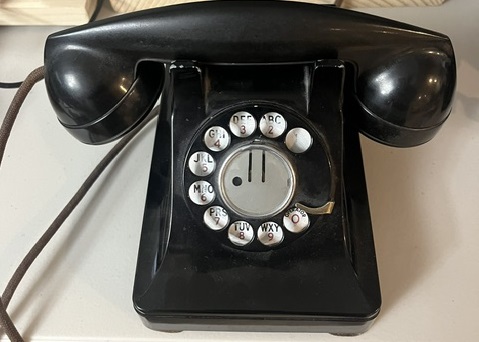
The Western Electric 300 series rotary dial phone, made from the late 1930s to the 1950s, was a staple in American households. Over 20 million were produced during its run. These phones served for decades, often lasting 30 - 50 years or more due to rugged construction. They featured cloth cords for durability and flexibility, and many were used on 2, 4, and 8 party lines - shared lines where multiple households rang with unique patterns (e.g., two short rings for one user). Most were offered only in black, as color options came later. Phones were leased from the phone company (Bell System) rather than owned, with monthly fees covering maintenance.
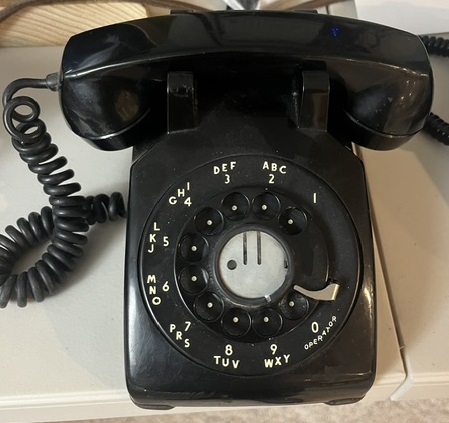
The Western Electric 500 series rotary dial phone, introduced in 1949 and made through the 1950s (production continued into the 1980s), became the iconic American desk phone. Over 93 million were produced, making it one of the most manufactured phones ever. It served reliably for 30 - 40 years, with many still functional today. Like the 300, most were black, though colors were introduced in the mid-1950s. The 500 was leased from the phone company under the Bell System monopoly, with users paying a small monthly fee for unlimited repairs and upgrades.
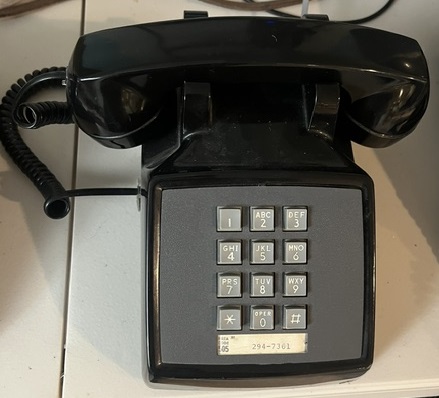
The Western Electric 2500 series touch-tone (DTMF) phone, introduced in 1968 as a modern replacement for rotary dials, was made through the 1980s. Millions were produced, with estimates over 50 million units. It served for 20 - 40 years in homes and offices. The 2500 retained the 500's design but added push-button dialing for faster, more reliable connections. Like predecessors, most were black and leased from the phone company, with color options available later.
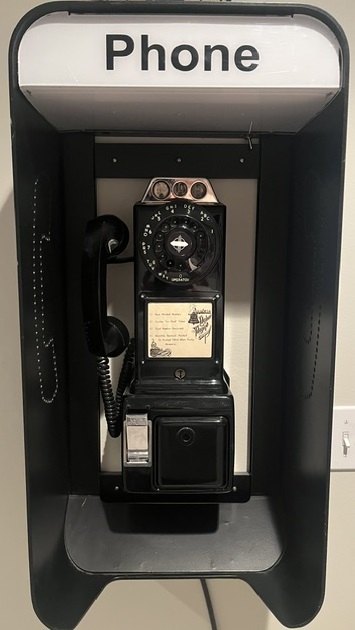
The 1950s coin-operated pay phone, such as Western Electric's 233G or similar models, was a common public fixture. Produced from the 1930s - 1960s, millions were installed nationwide. These phones served for 20 - 30 years until digital models replaced them. Payment worked with bells and totalizers: inserting coins (nickel, dime, quarter) triggered chimes (distinct tones for each coin) detected by the operator or switch. The totalizer mechanically counted value, releasing the dial tone once the local rate (e.g., 10 cents) was met. For long-distance, operators collected extra. These were leased to locations by the phone company.
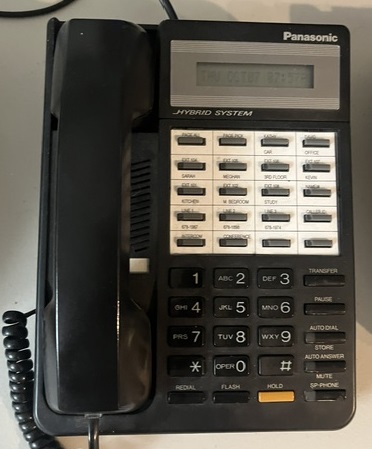
The Panasonic KX-T7030 (or similar digital proprietary phone from the 1990s - 2000s) is used as the primary phone to program the KX-TD816 and access more modern features of the phone system. These affordable corded phones were made in the millions for home/office use, serving 10 - 20 years. It supports touch-tone dialing, speakerphone, and memory keys - ideal for PBX programming and demos. The KX-T7030 is a digital extension phone designed for Panasonic hybrid systems like the TD816, with LCD display and function keys for advanced features.