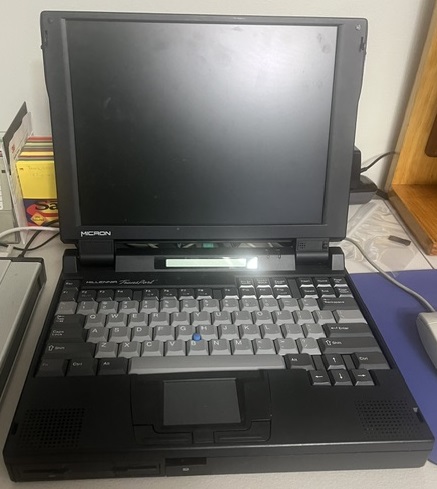
The Micron Millennia Transport, released in 1995 - 1996, was a high-performance multimedia laptop from Micron Electronics (later MicronPC), a direct-sales PC maker known for quality and value. Positioned as a "transportable" powerhouse, it targeted professionals and enthusiasts needing desktop-level performance on the go. It was one of the first laptops to push multimedia and high-speed computing in a portable form, making it a notable machine in the mid-1990s laptop era.
Micron Electronics, based in Nampa, Idaho, started as a memory chip manufacturer but expanded into complete systems in the 1990s. The Millennia Transport was part of their Millennia line, emphasizing performance, upgradability, and multimedia features. It competed with Toshiba, Compaq, and IBM ThinkPad models, offering similar specs at lower prices through direct sales.
Launched in late 1995 at around $3,000 - $4,500 (depending on configuration), the Transport was marketed as a "desktop replacement" laptop. It featured Intel's latest Pentium processors, large screens, and CD-ROM drives at a time when many laptops still had 486 chips and no optical drives. Sales were strong through Micron's direct channel and catalogs. Production ran into 1997, with thousands sold to businesses and power users.
The Millennia Transport used Intel Pentium processors. Key features included:
The dual floppy/CD-ROM bays and multimedia focus made it a true portable workstation.
Came with Windows 95, productivity suites (e.g., Microsoft Office), and multimedia demos. The large screen and CD-ROM enabled CD-based software, games, and encyclopedias. PCMCIA slots supported modems, network cards, and SCSI adapters. It supported docking stations for desktop use with external monitor/keyboard.
The Millennia Transport was a high-end multimedia laptop at a time when most portables were underpowered. It appealed to users needing CD-ROM and sound for presentations and early multimedia. As the owner's first laptop (alongside the Sharp PC-4500), it represents the mid-1990s shift to powerful, feature-rich portables. Today, surviving units are collectible, with enthusiasts upgrading RAM, replacing HDDs with CF adapters, and preserving the Windows 95 experience. It symbolizes the bridge from heavy luggables to modern laptops.