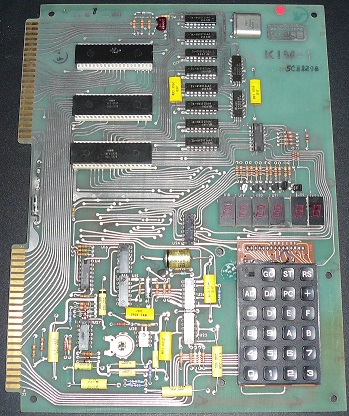
The MOS Technology KIM-1, introduced in April 1976, was one of the first fully assembled single-board microcomputers available to hobbyists and engineers. Named "KIM-1" for Keyboard Input Monitor, it offered an affordable, ready-to-use platform for learning and experimenting with the groundbreaking 6502 microprocessor, helping to popularize the chip that would later power iconic machines like the Apple II, Commodore PET, and Atari 8-bit computers.
The KIM-1 was designed by MOS Technology, Inc., a Philadelphia-based semiconductor company founded in 1969 by former Motorola engineers, including Chuck Peddle, Bill Mensch, and others. After developing the revolutionary low-cost 6502 microprocessor in 1975, MOS needed a demonstration and development system to showcase its capabilities. Chuck Peddle led the KIM-1 project as an inexpensive evaluation board that could also appeal directly to hobbyists.
Debuting at $245 complete (including case, power supply, and manual), the KIM-1 was advertised in Byte and Popular Electronics magazines. Priced far below competing single-board systems like the Altair or IMSAI add-ons, it sold tens of thousands of units. MOS even offered a "bare bones" version later. Its timing was perfect—coming shortly after the 6502's release and amid growing interest in microcomputers.
The KIM-1 was built around the MOS 6502 8-bit microprocessor. Key features included:
The entire computer fit on a compact 8.5" x 10" single-sided PCB, with all components easily accessible for experimentation.
The built-in KIM monitor (in ROM) allowed program entry in hexadecimal, memory examination/modification, running code, and tape load/save. Users programmed primarily in 6502 machine code or assembly language (using paper listings or external assemblers). A thriving user community shared programs via cassette and newsletters, including games like Lunar Lander and early versions of Microsoft BASIC ported to the 6502.
The KIM-1 played a crucial role in establishing the 6502 as a dominant microprocessor. Its low price and open design made microprocessor programming accessible to students, hobbyists, and professionals. Many early 6502 developers cut their teeth on the KIM-1, and it influenced later single-board computers. After Commodore acquired MOS Technology in 1976, production continued briefly. Today, original KIM-1s are highly sought-after collectibles, and modern replicas and emulators keep its legacy alive in the retro-computing community.