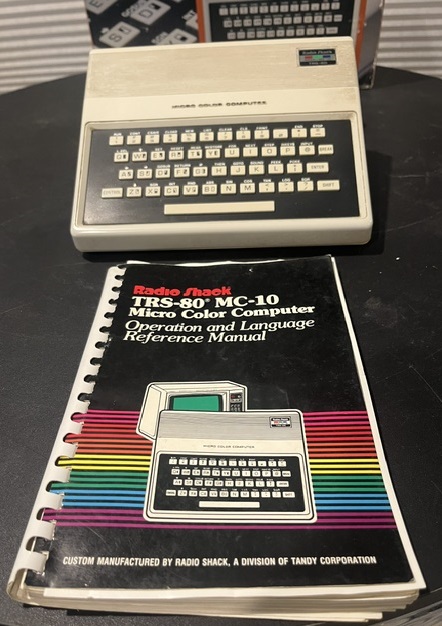
The TRS-80 MC-10, released in 1983, was Radio Shack's attempt to compete in the ultra-low-cost home computer market dominated by machines like the Sinclair ZX81, Timex Sinclair 1000, and Commodore VIC-20. Priced at just $119.95, it was a tiny, minimalist color microcomputer aimed at beginners and budget-conscious buyers, but limited memory and poor marketing led to short production life and relative obscurity today.
The MC-10 was essentially a licensed and slightly modified version of the French Matra Alice, designed by Matra and Hachette. Radio Shack partnered with French manufacturer Matra to bring a low-cost color machine to the U.S. market. The internal design was led by the original Alice team, with Radio Shack handling branding, packaging, and distribution through its vast retail network.
Announced in mid-1983, the MC-10 went on sale in Radio Shack stores for $119.95 (later dropped to $79). It was marketed as an entry-level color computer with Microsoft BASIC, targeting schools and first-time buyers. Despite initial enthusiasm, sales were disappointing—estimated at only 10,000-20,000 units. Production ceased by early 1984 as the more capable Color Computer and Model 100 portable took priority.
The MC-10 used the Motorola 6803 microprocessor (a 6800 variant with built-in I/O). Key features included:
The tiny case (about 8" x 6" x 2") included built-in power supply and RF modulator.
Microsoft BASIC in ROM offered immediate programming capability with PEEK/POKE and simple graphics commands. A small library of games (e.g., Lunar Lander, Checkers, Pinball) and educational titles appeared on cassette. Cartridges were rare due to short market life. Enthusiasts later developed homebrew software and expansions.
The MC-10 failed to capture significant market share against the VIC-20 and Timex Sinclair machines. Its limited RAM, poor keyboard, and lack of expansion hurt competitiveness. However, it introduced affordable color computing to some users and remains a curiosity among collectors. A dedicated retro community preserves software, creates modern expansions (e.g., SD card interfaces, RAM upgrades), and emulates it online. The MC-10 represents Radio Shack's brief foray into the sub-$100 color computer wars of the early 1980s.