|
|
|
|
|
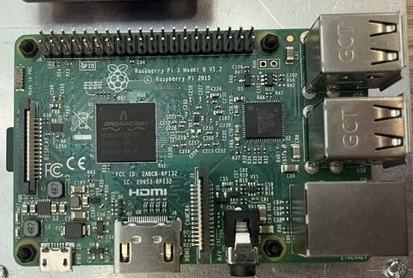
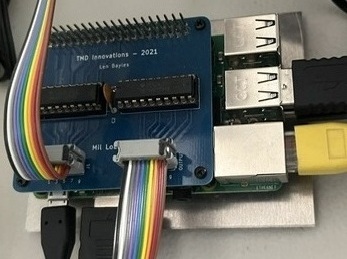
The Raspberry Pi is a series of small, affordable single-board computers (SBCs) developed by the Raspberry Pi Foundation. While not vintage itself, the Pi serves as an excellent modern support platform for vintage computers, acting as terminals, emulators, simulators, and storage emulators. In the MicroBasement, the Pi emulates paper tape or cassette storage for machines like the Mark 8 and Mil Mod 8, loading software such as SCELBAL via a simple 8-bit input/output port. This adaptable, software-driven interface bridges old and new hardware seamlessly. This write-up covers the history of the Raspberry Pi, its versions, OS support, original purpose, commercial applications, the organization behind it, its role in vintage computing, and available accessories including touch screens, cases, HATs, and more.
The Raspberry Pi was conceived in 2006 by Eben Upton, Rob Mullins, Jack Lang, and Alan Mycroft at the University of Cambridge to promote computer science education amid declining enrollment. The Raspberry Pi Foundation, a UK charity, was established in 2009. The first model, Raspberry Pi 1 Model B, launched in February 2012 after years of prototyping. It sold out instantly, with over 100,000 pre-orders. Designed as a $35 credit-card-sized computer, it aimed to inspire kids like the BBC Micro did in the 1980s. By 2026, over 70 million units have sold worldwide, evolving from education to industrial and hobbyist uses.
The Pi has seen multiple generations, each improving performance, connectivity, and form factors:
Each version balances cost ($5-$100) with power, focusing on education and DIY.
The Pi primarily runs Raspberry Pi OS (formerly Raspbian), a Debian-based Linux optimized for ARM. It supports many OS:
OS installation via SD card; community ports ensure broad compatibility.
The Pi was created to teach basic computer science in schools, addressing a decline in programming skills. Founders aimed for an affordable, programmable device like 1980s home computers (BBC Micro, Commodore 64). It encouraged tinkering with hardware/software, GPIO pins for electronics projects, and coding in Python/BASIC.
The Pi is used in millions of commercial applications worldwide, from factories to space. Examples:
Over 50 million Pis sold by 2026; commercial use grew 30% annually since 2019.
The Raspberry Pi Foundation is a UK charity founded in 2009 to promote computing education. It designs Pis through Raspberry Pi Ltd. (trading arm). Led by Eben Upton (CEO), it focuses on affordability, open-source, and global access. Revenue from sales funds education programs like Code Clubs and teacher training. The foundation emphasizes community, with forums, magazines (MagPi), and events like Pi Wars.
The Pi excels as a support platform for vintage computers:
Its GPIO pins enable custom interfaces, making the Pi a bridge between old hardware and modern tools.
The Pi ecosystem offers a vast range of accessories to expand functionality, especially useful for vintage computing support:
These accessories make the Pi highly adaptable for emulating vintage storage, running terminals, or interfacing directly with old hardware via GPIO.
The Raspberry Pi democratized computing, selling over 50 million units and inspiring a maker movement. From education to industry, it's a testament to affordable innovation. In the MicroBasement, the Pi shows how modern tech preserves and enhances vintage systems, keeping history alive.