|
|
|
|
|
SCELBAL was a BASIC interpreter for Intel 8008 and 8080 microprocessors, developed and published by Scelbi Computer Consulting Inc. in 1976. It allowed early microcomputer users to program in a higher-level language, making computing more accessible for hobbyists. In the MicroBasement, SCELBAL represents the early software efforts that complemented pioneering hardware like the Scelbi-8H. This write-up covers the history of Scelbal and Scelbi computers, how Scelbal was distributed, its cost, estimated sales, add-on packages, updates, and legacy.
Scelbi Computer Consulting Inc. was founded in 1973 by Nat Wadsworth and Bob Findley in Milford, Connecticut. The name is an acronym for "SCientific ELementary BIological." Initially focused on electronic consulting, Scelbi shifted to microcomputers with the Scelbi-8H in 1974, one of the first hobbyist computers based on the Intel 8008 microprocessor. Advertised in QST magazine in March 1974, the Scelbi-8H was sold as a kit or fully assembled, with 256 bytes of RAM expandable to 16KB. About 200 units were produced in 1975, but it didn't achieve massive commercial success. Scelbi soon discovered that software books generated more revenue than hardware, leading to a pivot toward publishing by the late 1970s. The company discontinued hardware production around 1976 but continued with software and books until the early 1980s.
SCELBAL (Scelbi BASIC Language) was developed by Nat Wadsworth and released in 1976 as a higher-level programming language for 8008/8080 systems. It was a dialect of BASIC tailored for the limited memory of early microcomputers, incorporating Wadsworth's floating-point package. SCELBAL was inspired by the need for easier programming on machines like the Scelbi-8H, Altair 8800, and other 8-bit systems. It competed with Microsoft's Altair BASIC and was one of the first commercially available BASIC interpreters for hobbyists. The language included standard BASIC commands but was optimized for small systems, requiring about 8KB of memory.
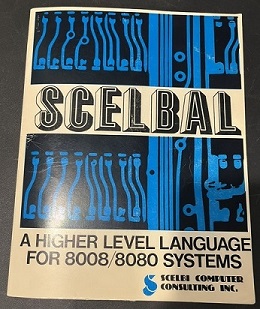
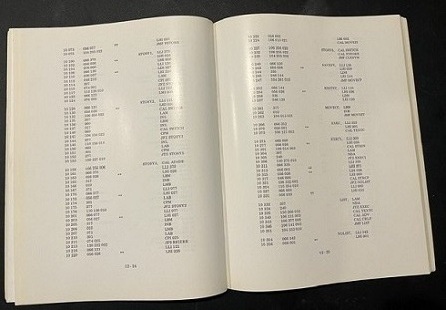
SCELBAL was primarily distributed as a book titled "SCELBAL: A Higher-Level Language for 8008/8080 Systems," published by Scelbi in 1976. The book contained complete source code listings, assembly instructions, and experiments. Users had to type in the code or purchase optional punched paper tapes or cassettes from Scelbi for easier loading. It was sold through mail-order ads in magazines like Byte, Radio-Electronics, and Dr. Dobb's Journal, as well as electronics catalogs. This "bookware" approach was common for early software, allowing wide distribution without manufacturing disks. Updates were mailed out in printed form for buyers to patch the SCELBAL package. The user acquired everything in printed form, which required typing or otherwise entering the software into a computer or programming an EPROM.
The SCELBAL book retailed for $49 in 1976 (about $270 in 2026 dollars). Optional punched paper tapes or cassettes added $10-$20. This made it affordable compared to commercial BASIC interpreters like Microsoft's ($150+ for Altair BASIC).
Exact sales figures for SCELBAL are not publicly documented, but Scelbi's software books were successful, with estimates in the thousands. Given Scelbi's shift to publishing (making more money from books than hardware), and the popularity of similar titles like their "8080 Software Gourmet Guide," SCELBAL likely sold several thousand copies to hobbyists and educators between 1976 and the early 1980s.
SCELBAL had three add-on packages to extend its functionality:
These were available as additional source code or tapes, allowing users to expand SCELBAL's capabilities.
In 1976, SCELBAL competed with several other BASIC interpreters for microcomputers:
SCELBAL and Scelbi computers played a key role in the early microcomputer revolution, inspiring DIY builders after the Mark-8. SCELBAL democratized programming by providing an affordable BASIC for 8-bit systems, influencing later interpreters. Scelbi's book-based distribution model foreshadowed open-source code sharing. In the MicroBasement, SCELBAL highlights the era when software was typed from listings, bridging hardware kits to modern programming.