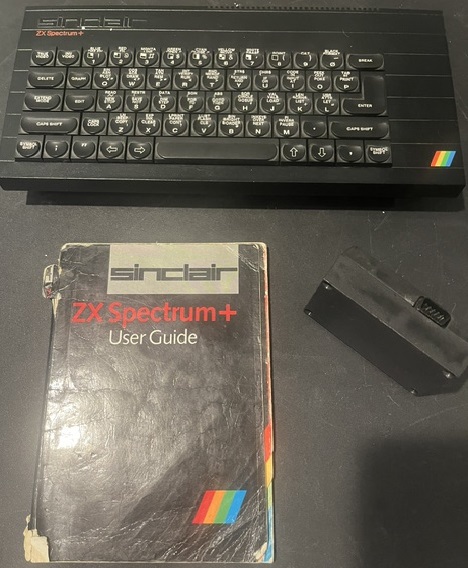
The Sinclair ZX Spectrum+, released in October 1984, was an enhanced version of the groundbreaking ZX Spectrum. It retained the core affordability and appeal of the original while introducing a more professional keyboard and minor upgrades, helping extend the Spectrum's dominance in the UK and European home computer market during the mid-1980s.
The Spectrum+ was designed by Sinclair Research Ltd., under Sir Clive Sinclair. The redesign focused on addressing user complaints about the original's "dead flesh" rubber keyboard, with Rick Dickinson handling the new QL-inspired case styling. It was essentially a cosmetic and ergonomic refresh rather than a full technical overhaul.
Launched in October 1984 at GBP 179.95 (48K model), the Spectrum+ replaced the original 48K Spectrum in production. Sinclair aimed to refresh the line amid competition from the Commodore 64 and Amstrad CPC. Despite higher price than the original, it sold well initially due to brand loyalty and vast software library. Production ended in 1986 when Amstrad acquired Sinclair's computer business.
The Spectrum+ was electronically identical to the late-issue ZX Spectrum 48K. Key features included:
Power via external 9V supply.
Full compatibility with the massive ZX Spectrum library—over 10,000 titles by mid-1980s, including Manic Miner, Jet Set Willy, and Elite. Sinclair BASIC remained the same, with one-key entry and tokenized storage. The reset button (missing on original) prevented crashes from bad POKEs. Add-ons like Interface 1 (Microdrives, RS-232) worked unchanged.
The Spectrum+ extended the platform's life, appealing to users wanting better typing experience without full upgrade. It solidified the Spectrum's cultural dominance in the UK, fueling a vibrant demo scene, bedroom coders, and gaming industry pioneers (e.g., Rare, Codemasters). Sales contributed to total Spectrum family exceeding 5 million units. Criticized for minimal upgrades (same internals, no joystick ports), it bridged to Amstrad's Spectrum +2/+3. Today, the Spectrum+ is collectible for its improved usability, with modern recreations (e.g., ZX Spectrum Next) and emulators keeping the legacy alive.