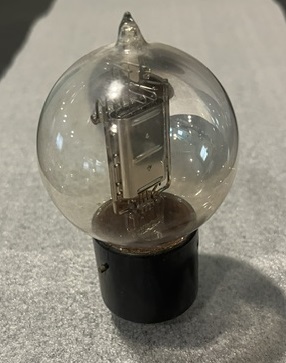
The Western Electric 101-F is a classic triode vacuum tube from the early days of telephony and radio. Introduced in the 1920s, it was one of the most important low-power amplifier tubes used in telephone repeaters, early broadcast transmitters, and radio receivers. In the MicroBasement, the 101-F represents the golden age of vacuum tube engineering - a reliable, high-quality tube that powered the expansion of long-distance telephone and the birth of commercial radio broadcasting. This write-up covers the history of Western Electric, the 101-F tube, its function, specifications, time period of use, and legacy.
Western Electric was founded in 1869 as Gray and Barton in Cleveland, Ohio, and reorganized as Western Electric Manufacturing Company in 1872. It became the manufacturing arm of the Bell Telephone Company (later AT&T) in 1882. Western Electric dominated telephone equipment production and also became a major player in vacuum tubes, radios, and sound-on-film technology. During the 1920s-1950s, it produced some of the highest-quality tubes ever made, used in telephone repeaters, broadcast transmitters, and military equipment. The company was dissolved in 1984 as part of the AT&T breakup, but its tube designs remain legendary among collectors and audiophiles.
The 101-F is a low-power, directly heated triode vacuum tube with a thoriated tungsten filament. It was introduced in the early 1920s as an improved version of earlier WE tubes (like the 101-D). It was designed for use in telephone repeaters (amplifying long-distance calls) and early radio equipment. The tube is compact, with a glass envelope, four-pin base, and top cap for the plate connection in some versions. It was known for its low noise, high linearity, and exceptional sound quality - qualities that later made it prized by audiophiles.
The 101-F was primarily used as a voltage amplifier in telephone repeaters and radio receivers/transmitters. Key specifications include:
It was prized for its low distortion and clean amplification, making it ideal for audio and telephony.
The 101-F was produced and widely used from the early 1920s through the 1940s. It was a staple in Bell System telephone repeaters for long-distance lines and in early broadcast and amateur radio equipment. Production continued into the 1950s for replacement parts, but it was largely replaced by more advanced tubes (e.g., 6J5, 6SN7) and eventually transistors in the 1950s-1960s.
The Western Electric 101-F is one of the most sought-after tubes among audiophiles today. Its exceptional linearity and low noise make it a favorite for high-end tube amplifiers and preamps. Vintage 101-Fs command high prices on the collector market (often $100-$500 each in good condition). In the MicroBasement, it stands as a testament to Western Electric's engineering excellence - a small, elegant tube that helped build the backbone of 20th-century communication and audio.